History

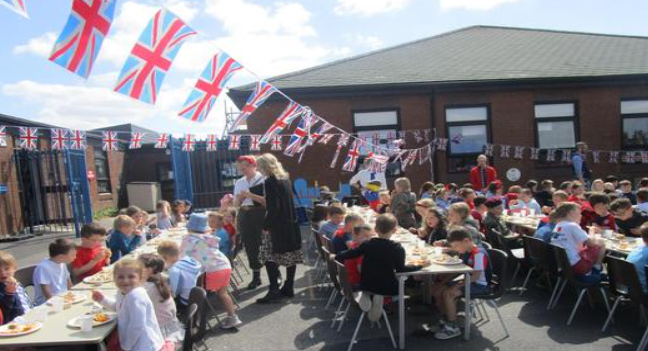
Intent
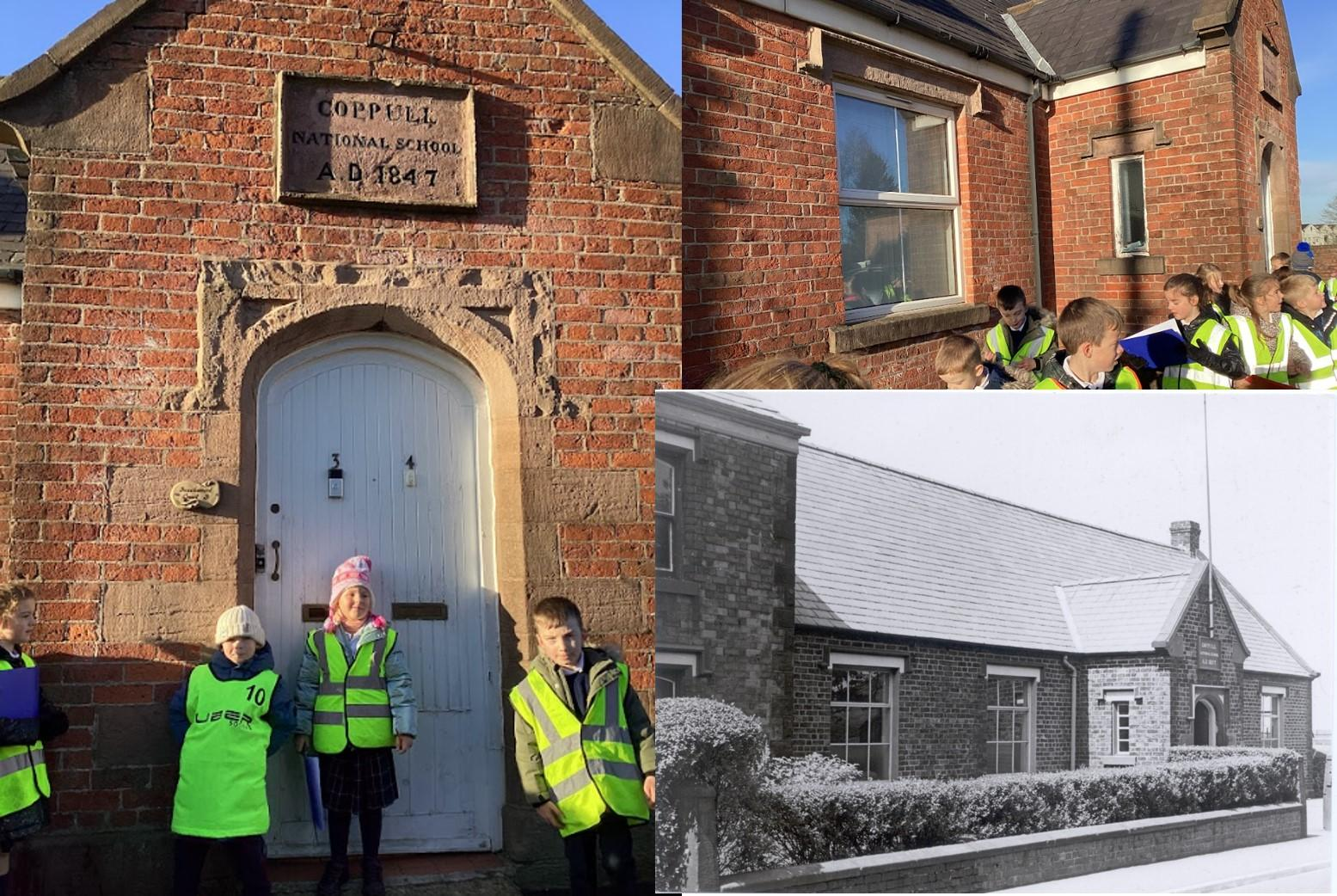
At Coppull Parish we aim for high quality history teaching following the National Curriculum throughout the school which inspires a curiosity and fascination giving them the tools to know more, remember more and understand more about the past. Our teaching equips pupils with knowledge about the history of Britain and how it has influenced and been influenced by the wider world. They gain knowledge and understanding about significant aspects of the history, changes in and beyond living memory and the lives of significant people of the past. Children use a range of methods of historical enquiry and are able to ask and answer relevant questions. We encourage children to enjoy and love learning about history by gaining this knowledge and skills, not just through experiences in the classroom, but also with the use of fieldwork in the local area and educational visits, then reflect on and use experiences to help shape their future.
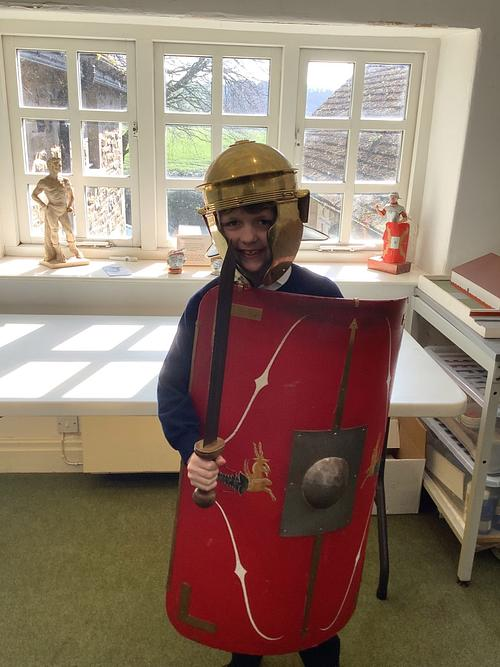
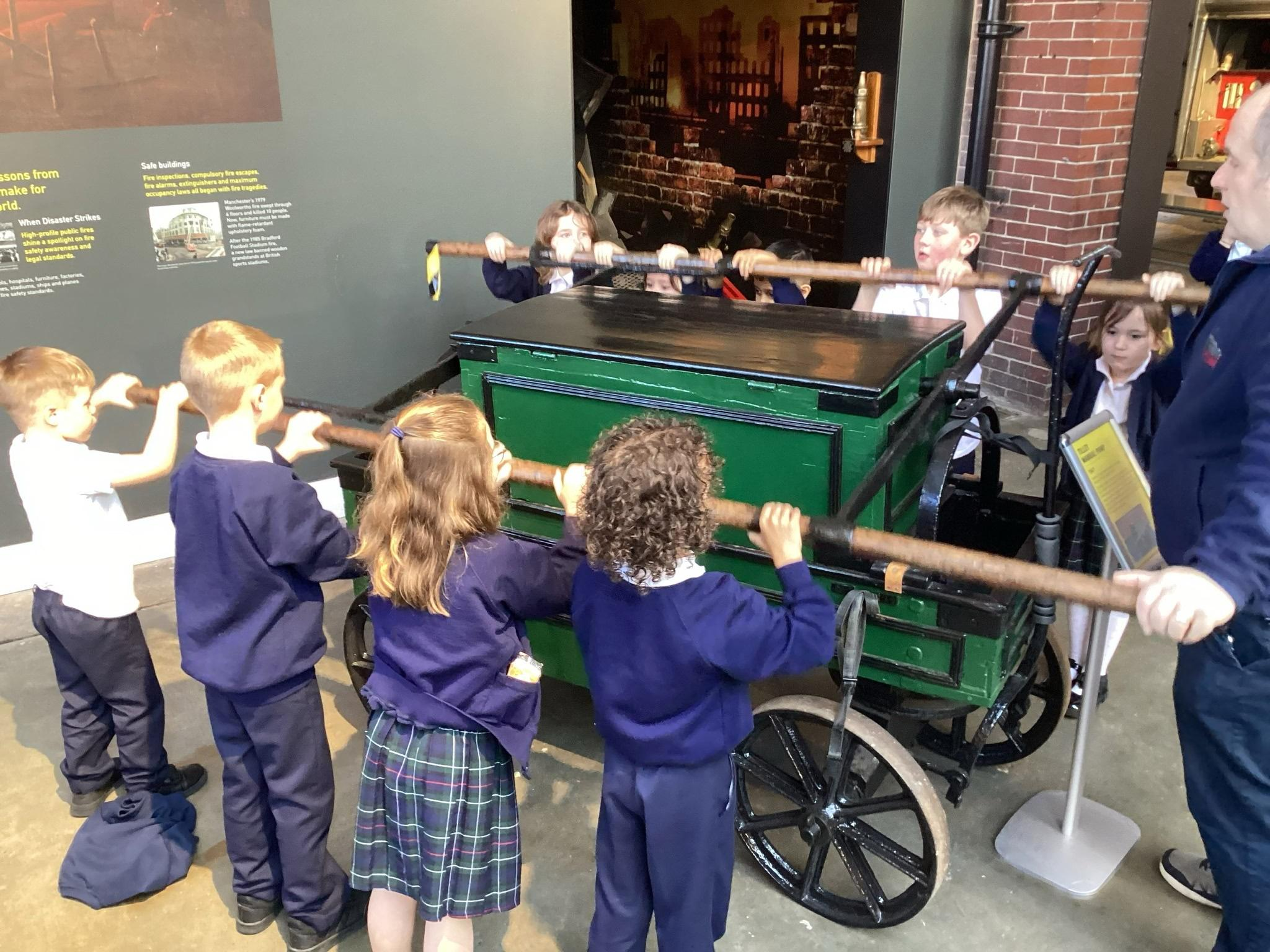
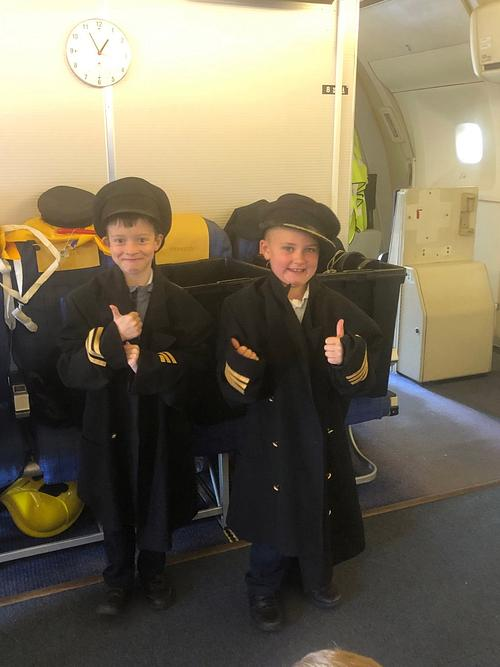


Implementation
Our History Curriculum has been written as a school, we take our skills from the National Curriculum and Focus curriculum, and tailor them to our school and children’s individual needs. History is taught in blocks throughout the year, so that children achieve depth in their learning and enjoyment through topic based learning. The key knowledge and skills that children acquire and develop throughout each block have been mapped to ensure progression between year groups throughout the school. At the beginning of each new history topic, teachers refer to classroom timelines to develop children’s understanding of chronology. Each topic is introduced with reference to the chronology of previous topics (including those from previous years). By the end of year 6, children will have a chronological understanding of British history from the Stone Age to the present day. They are able to draw comparisons and make connections between different time periods and their own lives. Interlinked with this are studies of world history, such as the ancient civilisations of Greece and the Egyptians.
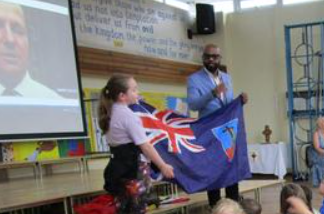
The history curriculum is designed to ensure appropriate diversity in the significant figures that children learn about. We supplement our history curriculum in several ways: trips, visits and visitors and we also have various topical assemblies throughout the year linked to Significant events such as Black History Month in October, Remembrance day and VE day, as well as others that are relevant year on year marking milestone anniversaries. These are celebrated and remembered as a whole school and often intertwine with our Christian values.
Impact
Our children are curious and compassionate about events and eras from the past and how they have made an impact on our lives and cultures today, both in our own country and community, as well as world wide. They know about significant events, people and eras . We assess the children at the end of each term and leaders analyse data provided by class teachers. This is used to prompt next steps in learning. Our children make good progress within History and enjoy their topics which are creatively taught. Children have a thirst for knowledge which often pushes them to further their knowledge and understanding of topics covered. Children view their history skills and knowledge as a tool to help them understand the world we live in today and shape their decisions they make in the future with the impact they will have on themselves, their community and the wider world.
The strands in History are:
● Chronological understanding
● Knowledge and interpretation
● Historical enquiry
The Early Years History Curriculum
The Early Years Foundation Stage (EYFS) follows the ‘Development Matters in the EYFS’ guidance which aims for all children in reception to have an ‘Understanding of the World; people and communities, the world and technology’ by the end of the academic year, this include being able to:
● Comment on images of familiar situations in the past.
● Compare and contrast characters from stories, including figures from the past.
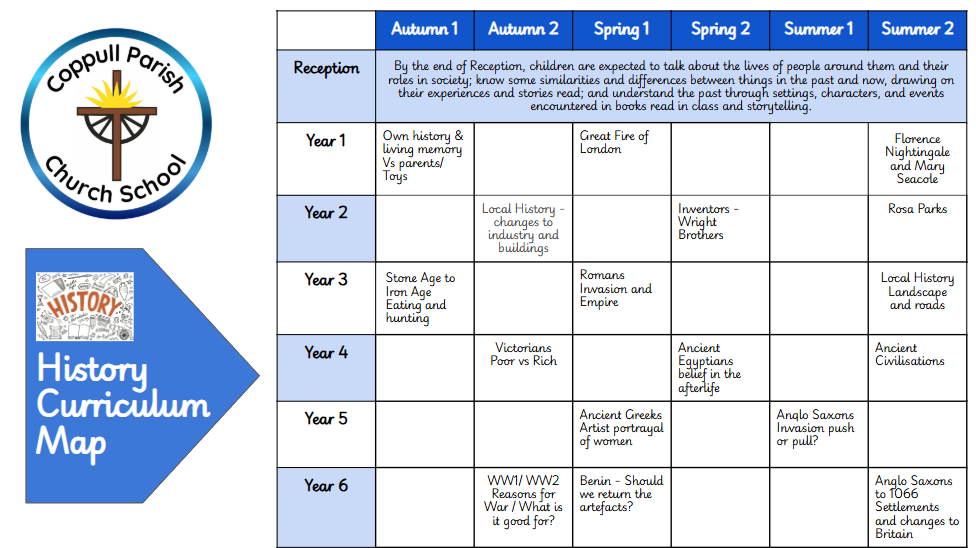
Curriculum map