
Music
Intent
‘A high-quality music education should engage and inspire pupils to develop a love of music and their talent as musicians, and so increase their self-confidence, creativity and a sense of achievement.’ Department of Education, National Curriculum
At Coppull Parish C of E Primary School, we believe music is a vital component of the curriculum. We value music because it is a powerful and unique form of communication that can change and impact the way children feel and think. We encourage children to participate in a variety of musical experiences through which we aim to build up children’s confidence, musical appreciation and compositional and performance skills. We promote the importance of learning and enjoying to play a musical instrument by investing time and money in specialist teachers and visiting musicians. Music is also a thread that permeates our whole school curriculum and can be found to support other subjects through singing and performing.
Implementation
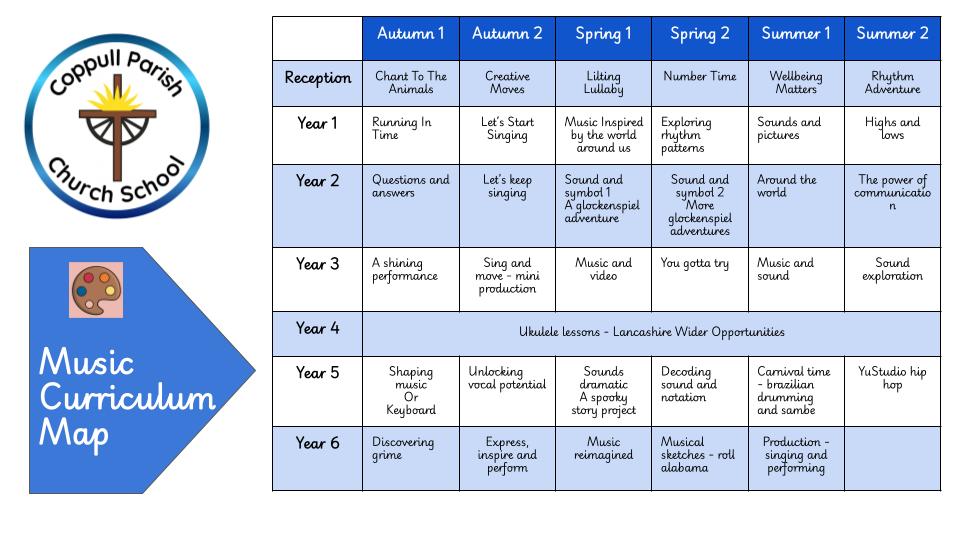
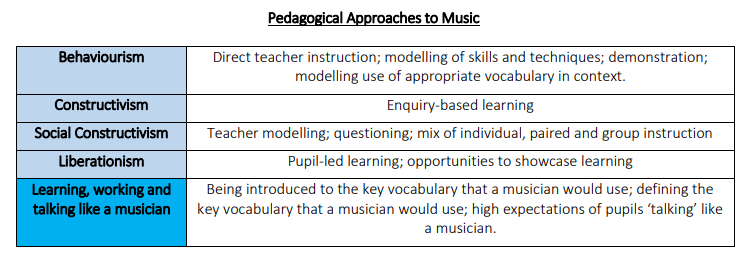
At Coppull Parish CE Primary school, we primarily follow the Charanga Creative Scheme of work. Charanga’s scheme follows a differentiated, spiral approach to musical learning which responds to the national requirements for musical education. Within each unit of learning, students revisit existing knowledge and skills and then build upon and extend them incrementally. In this manner, learning is consolidated and augmented, allowing for increasing musical confidence, while constantly being gently challenged to go further.
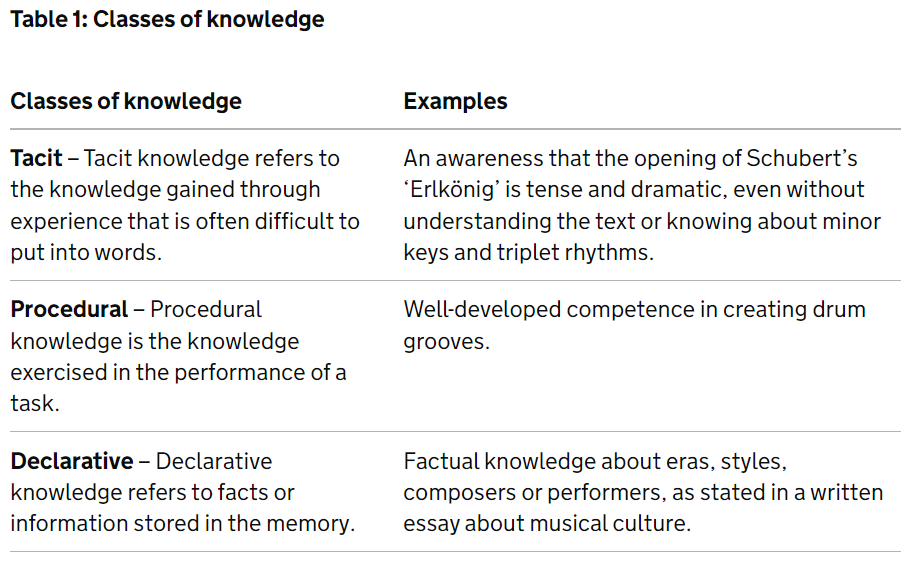
Our teachers are aware of the Music Research Review Series, and so therefore understand the importance of learning being a ‘change to long-term memory’. Our curriculum includes a variety of tacit, procedural or declarative knowledge so that our children become successful musicians. With this in mind, we adapt our Charanga Curriculum to ensure there is time for consolidation and practice as each class needs it. The spiral nature of the Charanga curriculum also aids and supports this.
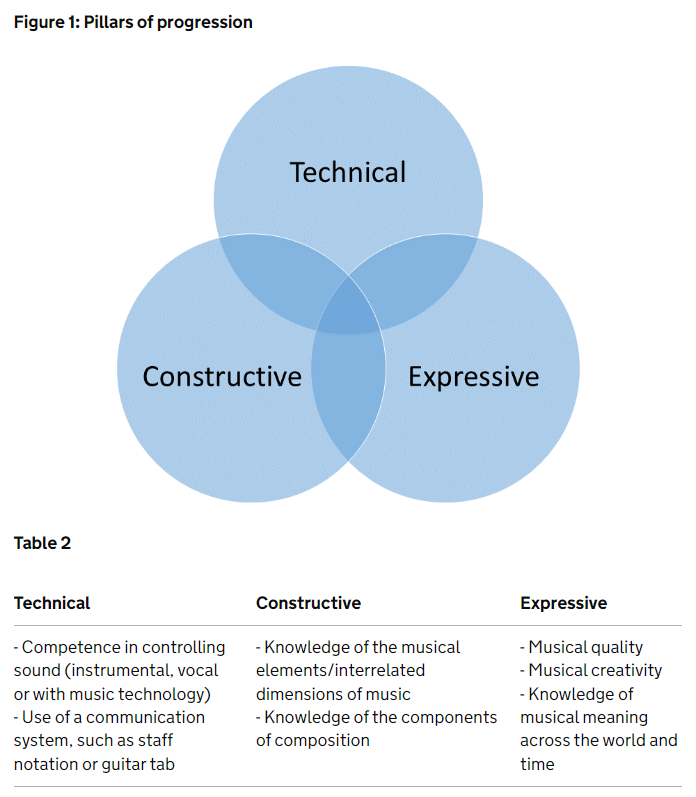
We also recognise and understand the 3 pillars of progression in music education: technical, constructive and expressive.
“This review proposes 3 pillars as the basis for progression in the musical activities of performing, composing and listening/appraising. A good music education is underpinned by robust, direct and incremental teaching that provides knowledge of music’s technical and constructive aspects. This knowledge is learned in the context of music’s history and provenance, allowing pupils to make increasingly sophisticated, expressive responses and gain musical meaning. Together, these pillars contribute to what could be described as ‘musical understanding’.” Research Review Series, July 2021
Finally, our curriculum is supported and enhanced by: learning songs to support other subjects (eg history, PSHE) and performing them in class and in assemblies; organising visits to the theatre; inviting musicians to perform for our children; Musician Of The Term.
Impact
In music, we formatively assess and video our children to help identify areas for development and progression. End of unit assessments are made, which feed into the overall end of year assessments. We use summative assessment to check on curriculum effectiveness. We aim for our children to leave Coppull Parish with a love of music, be that listening to it, singing, composing, playing or performing.
Charanga Creative Scheme Of Work: